
When you manage Poland from another country, a PR report can be difficult to judge. Some publication names may be unfamiliar, and a large potential reach figure tells you little about what people actually encountered. Before approving the next stage of activity, you need to understand what the work achieved.
A useful report should answer four questions: where did the brand appear, what did the coverage communicate, what response was observed and what should happen next? Publication counts help document delivery. Assessing success requires connecting those results with the objective agreed at the start.
For an international team, the local agency also needs to explain the Polish context. You should be able to understand why a publication matters and what its coverage contributed without having to read every article in Polish.
Set a point of reference before agreeing targets
Start with the communication problem. A brand entering Poland may need to introduce an unfamiliar product and explain where to buy it. An established brand may want to support a new range, strengthen its association with a category or become a regular source for journalists.
The reporting should reflect that purpose. If the objective is product understanding, visibility alone will give you an incomplete answer. You also need to examine whether the coverage explained the product correctly and, where research is available, whether the audience understood it.
Before setting targets, review the brand’s current visibility in Poland, previous comparable activity and the scope of the planned programme. Consider what the team can work with: confirmed news, spokesperson access, samples, supporting evidence and local availability. A target borrowed from another market may overlook differences in the campaign itself.
AMEC’s Integrated Evaluation Framework recommends establishing objectives, benchmarks and targets before evaluating outputs, audience response, outcomes and impact. This gives the reporting a point of reference beyond whether the latest month looks busier than the previous one. Source: AMEC Integrated Evaluation Framework.
For a new market entry, comparable data may be limited. Agree what the initial assessment will cover and when the evidence will be reviewed to refine expectations. The first reporting period can help establish a baseline, provided that purpose is clear before the activity begins.
Also confirm who supplies the data. The agency may manage media monitoring, your team may control website analytics and a Polish retail partner may hold sales information. Those responsibilities determine what the report can reliably assess.
Ask your agency to explain the Polish publications
A coverage list should help you understand the audience and relevance of the results. For the most important articles, ask for a short explanation of the publication, why it was relevant to the campaign and what the article communicated.
An English summary is particularly useful when the original coverage is in Polish. It should capture the substance: whether the brand was the main subject or a passing reference, which product benefits appeared, whether the information was accurate and what readers were told about availability.
The assessment depends on the objective. A regional publication may be relevant to a store opening because of its geographic audience. A specialist beauty article may offer space to explain a product in detail. A business title needs a story suited to its readers, such as a substantive expansion or distribution announcement.
Agree those priorities before outreach. Otherwise, the team risks judging publications according to how recognisable they look in a presentation rather than their role in the campaign.
Tone also needs interpretation. A neutral article can explain a product accurately and provide useful information. A positive mention may say little about what the product does. Automated sentiment labels can help organise monitoring, but important conclusions should be checked against the coverage itself.
Use consistent criteria to assess what the coverage delivered
Questions about quality become more useful when the team agrees what it will look for. Define a small set of criteria tied to the objective, then apply them consistently.
For a product launch, those criteria might include whether an article explains the intended use, contains an agreed key message, gives accurate Polish availability information and features the brand prominently. Each criterion needs a clear definition. For example, mentioning the brand name does not automatically count as explaining its product.
Consider this hypothetical example. A skincare brand wants its Polish launch coverage to help readers understand how to use a new product and where to buy it. The report reviews relevant articles for those two pieces of information, with links and short English summaries as evidence.
If coverage consistently explains the product but omits availability, the next step may be to make local stockist information easier for journalists to use. If articles mention the launch without explaining the product, the team may need clearer supporting material or a demonstration. The finding leads to a specific adjustment.
This analysis establishes what the published material communicated. To assess what readers understood or remembered, the measurement plan would need audience evidence, such as appropriately designed research.
Choosing criteria for an educational launch
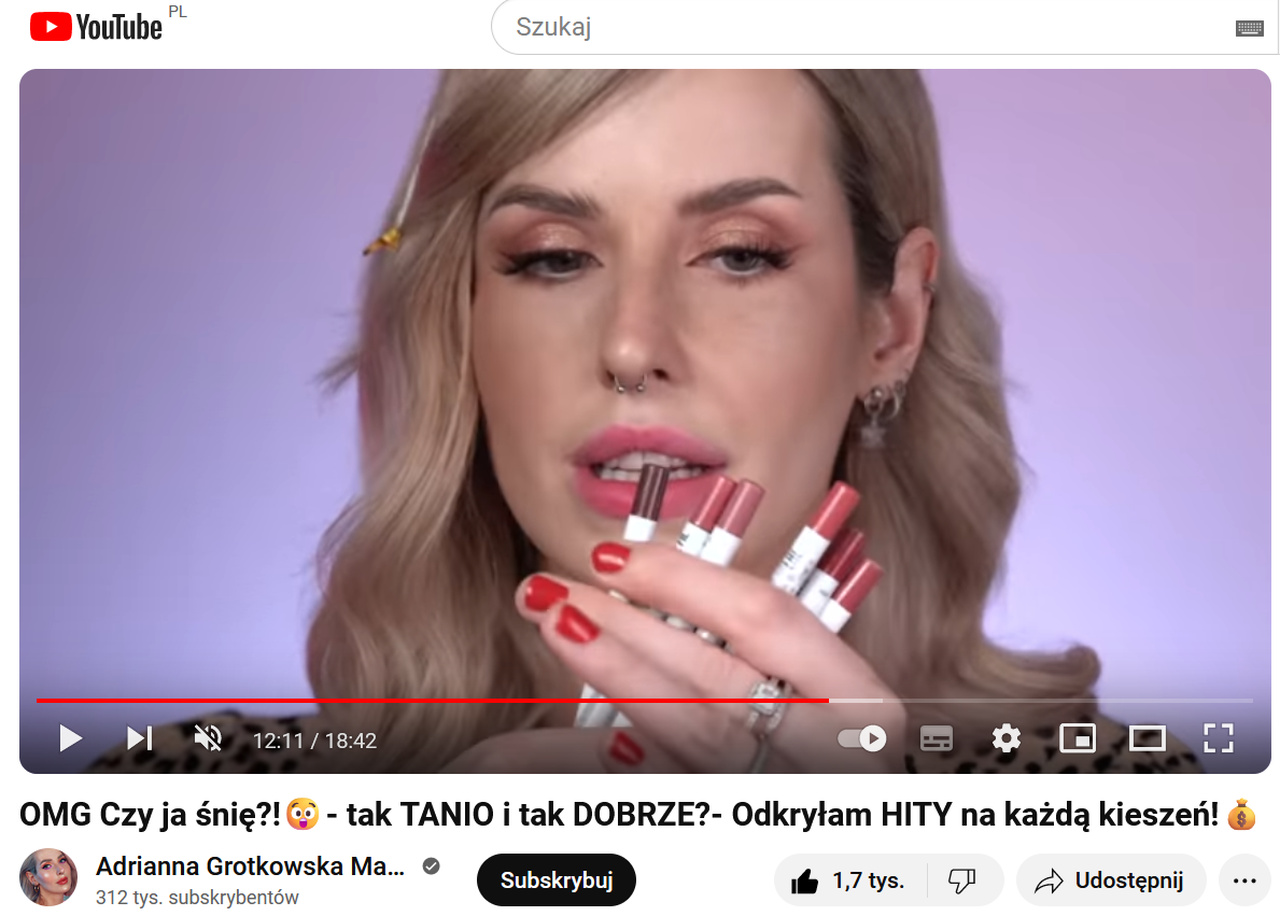
Our Florence by Mills programme in Poland combined media relations, creator activity and product experience around the brand’s availability at Douglas. We prepared contextual articles and educational guides about skincare routines and ingredients alongside product shipments and creator tests.
That work illustrates why product explanation can be a relevant coverage criterion. The case study documents campaign activity and publication results; it does not establish that audience understanding was measured. A report evaluating understanding would need additional evidence.
See our Florence by Mills case study.
Make reach and comparisons understandable across markets
A publication’s monthly audience, estimated potential reach and verified article views describe different things. Your report should name the metric, identify its source and explain how it was calculated.
If article-level readership data is unavailable, do not replace it with an assumed percentage of the publication’s total audience. Potential exposure can provide context, but it should remain labelled as an estimate. When figures are combined, the report should also explain whether audiences may overlap.
This becomes particularly important in regional reporting. If Poland reports potential exposure while another country reports verified views, placing both under “reach” creates a misleading comparison. Use common definitions across markets and retain local explanations of media relevance.
Share of voice needs similarly clear boundaries. Specify the competitors, monitored sources, search terms, period and unit being counted. A brand’s proportion of mentions within a selected group of Polish media describes visibility in that monitored set. It does not establish market share or the proportion of consumers paying attention.
Consistency allows the team to interpret changes over time. If the monitoring scope or methodology changes, explain that alongside the results.
Connect audience response with business data carefully
PR can generate trackable website traffic. Online coverage may send identifiable referral visits, while campaign parameters can help distinguish links where their use has been agreed. Google Analytics provides traffic-source dimensions for examining how sessions originated. Source: Google Analytics traffic acquisition documentation.
Keep three types of evidence clear. Website analytics can show recorded visits and activity associated with a traffic source. An attribution model can assign credit for a purchase or another action according to its rules. Establishing the incremental effect of PR requires stronger evidence about what would have happened without the activity.
For example, purchases recorded in sessions originating from a publication are useful observations. They do not prove that the article alone caused those purchases. Equally, some people may read coverage and later buy through a Polish retailer, leaving no identifiable journey in your own analytics.
Review available traffic, search and sales data alongside other activity, including advertising, promotions, pricing and stock availability. State which report and definitions support the conclusion. Where the evidence does not support a financial ROI claim, explain the contribution that can be demonstrated.
AVE should not substitute for that assessment. AMEC’s Barcelona Principles 4.0, published in 2025, reject advertising value equivalents as a valid measure and call for evaluation connected to outcomes and impact. Source: AMEC Barcelona Principles 4.0.
Finish the report with a recommendation
The most useful conclusion explains what the evidence means for the next decision.
If relevant Polish publications are covering the brand but missing an important product explanation, revise the materials or pitch. If journalists request samples that cannot be supplied, address the logistics. If coverage communicates the intended message but audience response remains unknown, decide whether further research is justified.
Each recommendation should follow from an observed result and distinguish what the team knows from what it still needs to investigate. That gives you a practical basis for continuing the programme, changing the approach or commissioning additional measurement.
For international teams, good Polish PR reporting combines accessible evidence with local judgement. You should understand why the coverage matters, how it compares with the agreed expectations and what the agency recommends doing next.
At Awesome PR Girls, we support international teams with PR and media relations in Poland. Agreeing the objectives, evidence and reporting definitions at the start helps both teams assess the work and use the findings throughout the programme.